Artificial Intelligence (AI) is rapidly reshaping various sectors, and education is no exception. From personalized learning experiences to intelligent tutoring systems, AI is making education more accessible, efficient, and engaging.
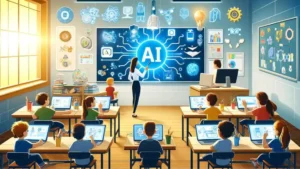
One of the most significant contributions of AI in education is personalized learning. AI algorithms can analyze a student’s learning style, pace, and progress, allowing platforms to adapt lessons accordingly. This means that students who need extra help can receive targeted support, while advanced learners can move ahead without being held back by a standardized curriculum.
Another powerful application is automated grading and feedback. AI can quickly evaluate multiple-choice tests, essays, and even coding assignments, providing instant feedback. This not only reduces the workload for teachers but also allows students to improve continuously through timely corrections.
Virtual tutors and chatbots are also enhancing the educational experience. These tools are available 24/7, answering students’ questions and guiding them through problems outside of class hours. This is particularly helpful in remote learning environments where access to a teacher may be limited.
Moreover, AI is playing a key role in identifying learning disabilities and helping educators design inclusive strategies. By analyzing behavioral data, AI can flag potential issues early, allowing for timely interventions.
However, the use of AI in education also raises concerns about data privacy, bias in algorithms, and the need for teacher training. It’s important that institutions implement AI responsibly and ensure that educators are equipped to integrate it effectively.
In conclusion, AI in education offers tremendous potential to enhance teaching and learning. While it cannot replace human teachers, it can be a powerful tool to support them and personalize education for every learner.